Abstract
Patient waiting time and inefficient appointment scheduling are among the most common causes of dissatisfaction in healthcare systems. The integration of Artificial Intelligence (AI) into queue management and appointment scheduling systems has significantly reduced waiting times by improving resource allocation and minimizing no-show rates. This paper reviews recent studies and real-world implementations after 2024, presenting data-driven evidence on how AI enhances patient satisfaction and operational efficiency in healthcare organizations.
Why “Intelligent Queue Management” Matters
Prolonged waiting times have consequences beyond frustration: worsening patient conditions, increased staff workload, and inefficient use of resources. Studies show that queue congestion and poor scheduling are major contributors to operational inefficiencies in hospitals and clinics, making queue optimization a top management priority [1].
AI-based Solutions for Smart Appointment Scheduling
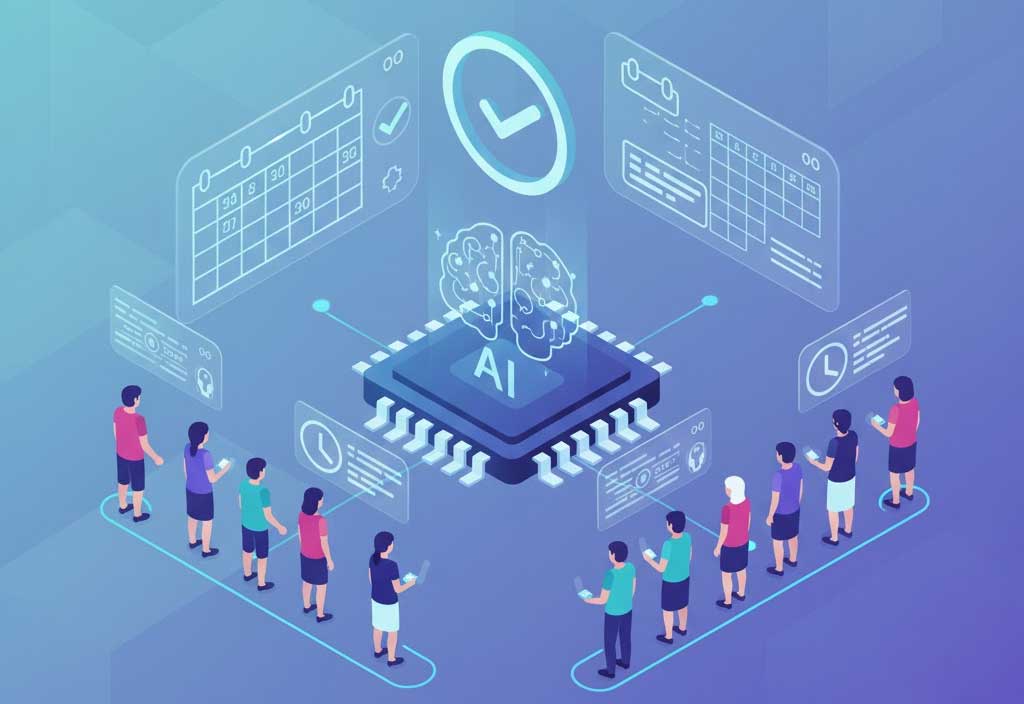
Smart scheduling systems utilize historical visit data, no-show patterns, average consultation durations, and real-time updates to:
-
Enable dynamic scheduling;
-
Optimize real-time booking;
-
Prioritize patients based on clinical urgency and risk;
-
Send AI-driven reminders to reduce no-show rates.
Research demonstrates that machine learning and reinforcement learning algorithms improve time allocation and queue optimization. For instance, AI-based priority algorithms have significantly reduced waiting times for emergency cases [2][3].
Quantitative Evidence and Field Studies (Post-2024)
-
A 2024 study reported that AI-driven appointment systems increased patient punctuality by about 10% per month and improved hospital capacity utilization by 6% [4].
-
Clinics adopting AI scheduling experienced an average 20–30% reduction in waiting times and a 10–30% decrease in no-show rates [5].
-
Combining reinforcement learning with priority queueing led to measurable improvements in response time for urgent cases across both simulated and real environments [2][6].
Impact on Patient Satisfaction and Hospital Performance
Shorter waiting times and transparent scheduling processes directly boost patient satisfaction and reduce treatment-related stress. Additionally:
-
Physician productivity and time utilization increase;
-
Administrative workload decreases through automation;
-
Revenue per physician and total effective consultations rise.
Surveys from 2024–2025 show that both patients and providers express greater trust in AI-supported systems, with average satisfaction rates increasing by 35% and staff fatigue decreasing by 25% [1][5].
Challenges and Implementation Considerations
Despite its benefits, implementing AI-based queue management faces several challenges:
-
Data Quality: AI models require clean, standardized datasets.
-
Privacy and Regulation: Compliance with patient data protection laws is essential.
-
User Adoption: Some patients and staff may resist automation; proper training and user-centric design are vital.
-
Equity in Access: Patients with limited digital access must be supported through offline or hybrid pathways [3][5].
Practical Recommendations for Healthcare Providers
-
Start with a pilot project in a limited clinical setting to evaluate real-world effects [4].
-
Collect and clean operational data over 6–12 months for model training [2].
-
Define clear KPIs, such as average waiting time, no-show rate, and Net Promoter Score (NPS) [5].
-
Ensure equitable access for digitally underserved populations through alternative scheduling channels [3].
Conclusion
Artificial Intelligence is a powerful tool to solve long-standing challenges in queue and appointment management. Evidence shows that intelligent implementation can substantially reduce waiting times, lower no-show rates, and enhance both patient satisfaction and organizational performance. However, sustainable success depends on high-quality data, ethical design, and patient-centric implementation.
References
- “The Role of AI in Hospitals and Clinics: Transforming Healthcare in Operational Efficiency”, PMC
- “Artificial intelligence for patient scheduling in the real-world health system”, ScienceDirect.
- “A Solution to Reduce the Impact of Patients’ No-Show Behavior on Appointment Systems”, MDPI.
- “Artificial intelligence machine learning-driven outpatient and appointment management”, PMC.
- “How AI Improves Healthcare Scheduling Operations [+ Case Study]”, CCD Health.
- “An adaptive decision support system for outpatient appointment scheduling”, Nature.