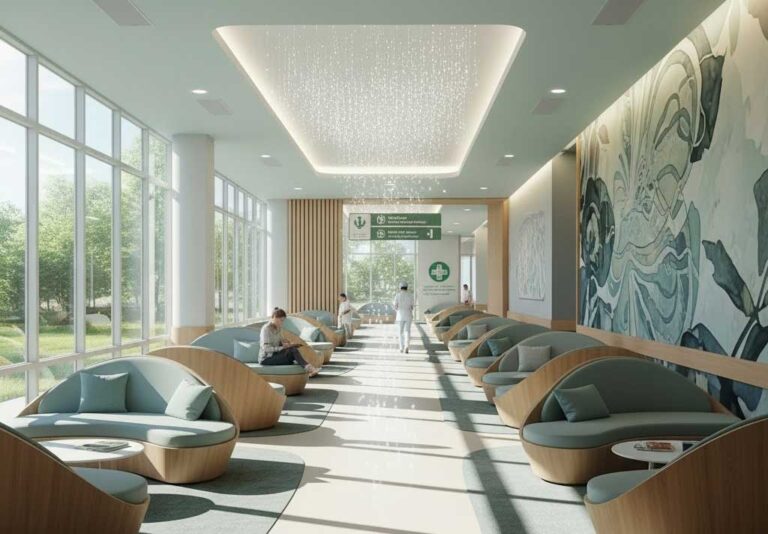
Patient experience goes beyond purely medical care—therapeutic environments can deeply influence relaxation, hope, and the effectiveness of treatment. When space, light, color, and music are integrated with therapeutic goals, a healthcare center becomes not just a place for treatment, but a sanctuary for emotional and physical restoration. This approach is especially vital in luxury healthcare centers, where the fusion of art and patient-experience design strengthens the brand identity and creates meaningful competitive advantage.
The Role of Environmental Design in Patient Experience
Interior design that prioritizes patient comfort can significantly reduce stress and anxiety while enhancing a sense of relief. A 2025 article highlights the importance of hospital design centered on patient experience, emphasizing that architecture should create a healing rather than merely functional space [1]. According to design experts, incorporating green spaces, natural light, and sound insulation improves the sense of belonging, reduces psychological pressure, and strengthens patient trust [2].
Biophilic Design and Environmental Effects
One of the most effective therapeutic design approaches is biophilic design—the integration of natural elements into built environments. A systematic review found that biophilic design in healthcare settings meaningfully reduces length of stay, stress levels, mortality rates, and also enhances staff well-being [3]. This includes natural light, views of greenery, indoor plants, natural textures, and organic materials [3].
A focused study in oncology wards proposed a framework prioritizing biophilic design elements based on their impact on patient satisfaction and stress reduction—for example, providing direct visual connection to nature in waiting or chemotherapy areas is considered highly valuable [4].
Color and Light: Core Components of Calmness
Color and lighting choices play a central role in shaping patient experience. Modern therapeutic design favors soft colors such as light blue, soft green, or beige, as they help reduce psychological stress [5].
Natural light is equally essential: multiple studies show that access to daylight improves circadian rhythm regulation, reduces anxiety, enhances sleep quality, and even shortens the length of hospital stay [6]. Thoughtful design of ceilings, windows, and interior lighting systems further enhances therapeutic exposure to natural light [7].
Music and Sound in Therapeutic Experience
Beyond visual and spatial elements, ambient music and natural soundscapes significantly influence patient experience. Allowing patients to listen to preferred music or soothing nature sounds—such as water, birdsong, or wind—enhances their sense of control and calmness. This is especially effective in high-stress areas like waiting rooms, where such interventions have been shown to reduce anxiety and increase patient engagement in their care process [1,2].
Design studies also show that the combination of soft lighting and ambient music helps regulate patient emotions and creates an inspiring, soothing environment [5].
Luxury Branding Through Patient Experience Design
Luxury healthcare centers that prioritize patient-experience design gain strong competitive advantage. High-end aesthetics, premium furniture, hospitality-oriented services, and welcoming spaces help patients feel they are in an upscale healing retreat—rather than a clinical facility. Research shows that creating a “small urban oasis” inside hospitals—featuring green pathways, cozy niches, naturally lit lobbies, luxury amenities, and artistic elements—increases patient satisfaction, loyalty, and return rates [1].
Design that emphasizes art and tranquility also encourages patients and families to recommend the center, solidifying its brand image as a premium healthcare destination.
Challenges and Solutions
Implementing art-driven, nature-based design in healthcare involves several challenges:
High initial costs:
Green walls, large windows, plant systems, or specialized lighting and audio systems require significant investment.
Maintenance and sustainability:
Natural elements, water features, and daylight systems require ongoing care.
Regulatory compliance:
Aesthetic design must align with clinical safety standards—such as hygiene and sanitization requirements.
Staff acceptance:
Nurses and clinicians may resist environmental changes; involving them early and gathering continuous feedback is essential.
Measuring impact:
Without clear KPIs, it becomes difficult to justify design investments.
Recommended solutions include:
-
Launching small pilot zones (e.g., reception, corridors) before full adoption
-
Defining patient experience KPIs (satisfaction, return rate, length of stay, medication usage)
-
Continuous data collection from patients, staff, and families
-
Collaboration between architects, interior designers, clinical leaders, and patients
Key KPIs for Measuring Patient-Experience Design
To evaluate how environmental design affects patient experience, healthcare managers should track:
-
Patient Satisfaction Score
-
Net Promoter Score (Patient NPS)
-
Length of Stay (LOS)
-
Patient Return Rate / Loyalty
-
Usage of Sedatives or Pain Medication
-
Stress & Anxiety Indicators (psychological scales or physiological markers)
-
Staff feedback, wellbeing, turnover
Conclusion
Art in patient experience—whether through biophilic design, color and light, music, or interactive elements—plays a vital role in enhancing treatment outcomes and elevating luxury healthcare branding. When patients experience beauty, calmness, and control within a therapeutic space, not only does health improve, but the facility becomes deeply memorable and distinctive.
References
- Designing for Wellness: The impact of innovative hospital construction design on patient experience — CCBP (2025).
- Beyond Aesthetics: Biophilic Design & Neuroscience in Healthcare Spaces — I+S Design (2025).
- Al Khatib, I.; Samara, F.; Ndiaye, M. “A systematic review of the impact of therapeutical biophilic design on health and wellbeing of patients and care providers in healthcare services settings.” Frontiers in Built Environment (2024).
- A Framework for implementing biophilic design in cancer healthcare spaces to enhance patients’ experience. International Journal of Sustainable Building Technology and Urban Development (2023).
- Sustainable Healing and Therapeutic Design Driven Well-Being in Hospital Environment. MDPI Buildings (2022).
- Biophilic Design in Hospitals: Natural Light on Patient Health — Rockfon / CEE Blog (2022).