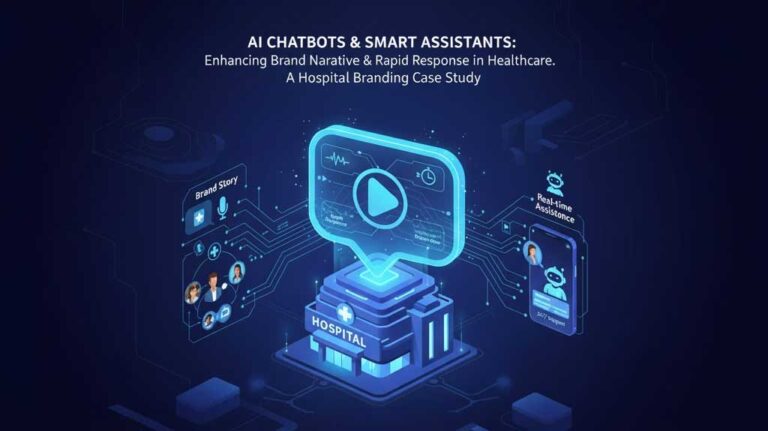
The healthcare industry—particularly hospital branding—requires a level of trust, uninterrupted accessibility, and empathy that goes far beyond traditional service delivery. This paper explores how strategic integration of chatbots and intelligent assistants can strengthen the hospital brand narrative around quality of care and patient-centeredness, while improving rapid responsiveness. Findings indicate that chatbots, by personalizing interactions, offering 24/7 service, and automating administrative processes, can significantly enhance the patient experience (PX) and consequently reinforce hospital brand equity (BE).
Keywords: Healthcare Chatbots, Hospital Branding, Patient Experience, Rapid Responsiveness, AI in Healthcare, Patient Trust
1. Introduction: Challenges in Hospital Branding
Hospital branding is grounded in trust, credibility, and quality of service [Jamshidi Fard & Samiee Nasr, 2016]. Patients seek institutions that stand out not only for medical expertise but also for offering a compassionate and accessible care experience. In this context, expectations for instant access to information (e.g., appointment schedules, medical records, or treatment guidance) are particularly high. Given these sensitivities, chatbots represent a technological bridge between the emotional and administrative needs of patients and the limited human resources available [Coherent Solutions, 2025; SYDLE One, 2025].
2. Strengthening the Hospital Brand Narrative through Chatbots
A hospital’s brand narrative tells the story of its commitment to healing and well-being. Chatbots have the potential to make this narrative tangible and interactive.
2.1. Embodying Brand Personality through Digital Empathy
In healthcare, the voice and tone of a brand must convey empathy and reassurance. Healthcare chatbots, powered by natural language processing (NLP), can create supportive, nonjudgmental, and calming conversations [DLabs.AI, n.d.]. This digital empathy becomes critical when patients feel anxious—such as when checking symptoms or asking about medication side effects. Such interactions elevate the hospital’s brand narrative from a purely medical entity to a compassionate care companion [Chatbots for Healthcare, n.d.].
2.2. Personalizing the Patient Journey
By analyzing patient data, chatbots can personalize interactions from the first search—e.g., when a user looks for a specific specialty. Personalization may include:
• Tailored education: Delivering patient education content relevant to the patient’s history and condition [Capacity, 2025].
• Smart reminders: Sending customized, non-intrusive reminders for medications, appointments, and follow-ups [Softude, 2025].
• Service routing: Guiding patients to the right specialists or departments based on their stated needs, streamlining the overall experience.
This personalized approach strengthens the brand’s narrative of unconditional commitment to individualized care and improves overall patient satisfaction [Manare sane, 2024; Capacity, 2025].
3. Rapid Responsiveness and Building Therapeutic Trust
Healthcare is an industry where delays can have serious consequences. The ability of chatbots to offer instant responsiveness directly impacts patient trust and loyalty.
3.1. 24/7 Access and Anxiety Management
Providing 24/7 chatbot access gives hospitals a major competitive advantage. Patients and families often seek reassurance or information outside regular hours. Chatbots can:
• Instantly respond to general inquiries: Visiting hours, directions, required documents, and insurance details [Softude, 2025].
• Guide initial symptom checks: In non-emergency cases, chatbots can assist in symptom checking and recommend appropriate next steps (e.g., visiting the ER, booking an appointment, or home care) [DLabs.AI, n.d.].
Continuous accessibility reduces patient anxiety and conveys a sense of security and support, which are core components of hospital brand equity [A Mediation Model of Trust…, n.d.].
3.2. Reducing Workload and Enhancing Human Resource Efficiency
By automating routine administrative tasks (e.g., appointment scheduling, reminders, and FAQs), chatbots significantly reduce the workload of reception and nursing staff [SYDLE One, 2025]. This not only leads to cost reduction [Coherent Solutions, 2025] but also allows human teams to focus on complex, empathy-driven care, where emotional intelligence is crucial. Such process optimization reinforces the hospital’s brand narrative of efficiency and quality care.
4. Ethical and Operational Challenges: The Boundaries of Technology in Healthcare
Despite their benefits, chatbot implementation in healthcare involves substantial legal, ethical, and technical challenges [DLabs.AI, n.d.]. Addressing these transparently within the brand narrative is vital to preserving patient trust.
4.1. Data Privacy and Security
The primary concern is protection of sensitive patient health information (PHI). Chatbots collect and process vast amounts of personal and medical data.
• Legal compliance: Hospitals must ensure chatbot systems comply with stringent global regulations such as HIPAA (U.S.) or corresponding local laws. Violations may result in heavy penalties and severe reputation damage [Coherent Solutions, 2025].
• Transparency: Hospitals should clearly disclose how chatbot conversations are stored, shared, and used, and obtain informed consent from patients [Kaplan & Haenlein, 2021].
4.2. Accuracy and Clinical Validity
Technical errors or cognitive biases in medical chatbots can lead to life-threatening outcomes.
• Accountability: Chatbots are tools for decision support, not decision-making. Hospitals must clearly define their limits and emphasize that chatbot responses are not substitutes for professional medical advice.
• Misleading risks: In symptom-checking, chatbots may misclassify conditions or suggest inappropriate actions. Thus, emergency escalation mechanisms—to transfer conversations to human professionals—are an ethical necessity [DLabs.AI, n.d.].
4.3. Replacement of Human Empathy
Although chatbots can simulate digital empathy, they cannot replace human emotional connection and psychological support [SYDLE One, 2025].
• Crisis interactions: Delivering bad news or discussing invasive treatments requires direct human engagement.
• Human–technology balance: The hospital brand strategy should position chatbots as complementary tools, automating routine tasks while enabling staff to focus on complex and empathetic interactions. This balance sustains both care quality and brand integrity.
5. Conclusion
The adoption of chatbots and intelligent assistants in hospital branding transcends mere technology—it represents a strategic investment in patient trust and the brand’s care narrative. Chatbots, through 24/7 responsiveness, personalized communication, and empathetic tone, enhance patient experience during the most emotionally sensitive moments. This improvement directly fosters higher loyalty, satisfaction, and positive brand perception [Jamshidi Fard & Samiee Nasr, 2016].
However, successful deployment requires a balanced, ethical approach. Hospitals that combine transparency in data handling, accuracy in information, and clear role distinction between chatbots and clinicians will not only benefit from instant responsiveness but also strengthen patient trust—the cornerstone of their brand. Ultimately, chatbots should act as facilitators and amplifiers of the healthcare brand narrative, not as its replacements.
References
-
A Mediation Model of Trust in Chatbot Interactions: The Role of Responsiveness and Emotional Cues in Shaping Behavioral Intentions. (n.d.). Review of Applied Management and Social Sciences.
-
Capacity. (2025). Chatbots in Healthcare: Improving Patient Engagement and Experience.
-
Chatbots for Healthcare. (n.d.). BCC Healthcare Branding.
-
Coherent Solutions. (2025). AI Chatbots in Healthcare: Use Cases, Examples, Benefits.
-
DLabs.AI. (n.d.). How Chatbots in Healthcare Are Transforming the Patient Experience.
-
Jamshidi Fard, A., & Samiee Nasr, M. (2016). Developing Customer-Based Brand Equity for Hospital Image Improvement. Civilica.
-
Manare sane. (2024). The Impact of Artificial Intelligence on Medical Branding. (Original source in Persian)
-
Softude. (2025). 7 Ways AI Healthcare Chatbots Improve Patient Experience.
-
SYDLE One. (2025). Chatbots in Healthcare: Impact on the Patient Experience.