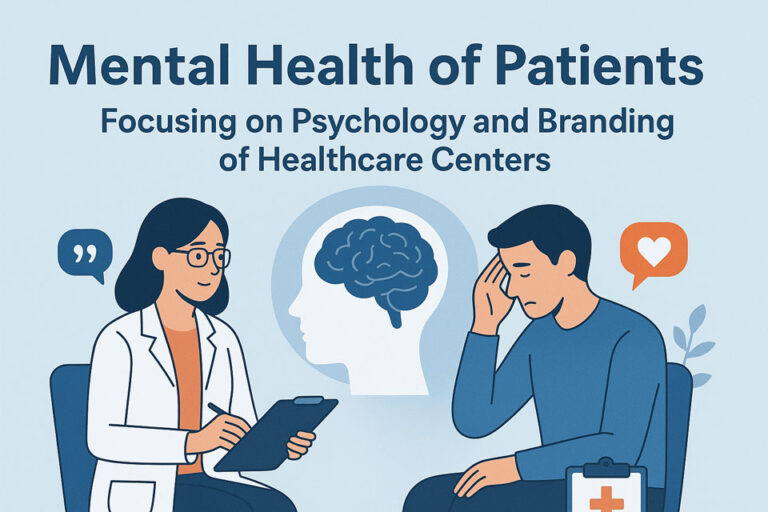
Over the past decade, the link between clinical quality, patient experience, and mental health outcomes has become increasingly evident. Today, healthcare centers are not merely sites for treatment but are also perceived as brands that convey safety, trust, and emotional reassurance. Building a healthcare brand that integrates psychological principles can lower barriers to mental health care, enhance treatment adherence, and improve long-term outcomes [1].
The Psychological Perspective on Mental Health in Clinical Care
Mental health encompasses a wide spectrum of conditions that affect thoughts, emotions, and behaviors. Recent evidence shows that integrated care models — where psychological services are embedded within primary or specialized care — significantly improve anxiety and depression symptoms while increasing patient satisfaction [1]. This approach not only eases access but also reduces stigma, since mental health support becomes a natural part of routine care pathways [1][8].
Organizational Environment, Staff Well-being, and Patient Mental Health
The quality of patient experience is directly linked to organizational factors such as staff burnout, teamwork, and organizational culture. Systematic reviews demonstrate that nurse and clinical staff burnout strongly correlates with reduced patient safety, lower care quality, and decreased satisfaction scores. Conversely, improving staff well-being positively impacts patient mental health outcomes and experience [2][3]. Thus, any branding effort that targets patient mental health must simultaneously address the mental well-being of staff to generate sustainable improvements [2][3].
Healthcare Branding: Psychological and Operational Elements
An effective healthcare brand combines clear messaging, alignment of services with values, and consistent patient experiences. From a psychological perspective, branding should meet three basic human needs: safety, belonging/acceptance, and predictability. Branding messages that address these needs can reduce pre-treatment anxiety and enhance trust. Practically, tools such as patient-centered storytelling, transparent care pathways, and continuous patient feedback form the pillars of a strong healthcare brand [5].
Reducing Stigma and Improving Access: Why Branding Matters More Than Advertising
Stigma is one of the greatest barriers to mental health care utilization. A recent systematic review highlights that multi-component interventions — including public education, structured social contact, and organizational policy changes — are most effective in reducing stigma. Responsible branding that communicates respect, confidentiality, and compassion can function as part of such anti-stigma strategies, thereby increasing access and continuity of care [4].
Linking Patient Experience, Brand Trust, and Clinical Outcomes
Large-scale studies confirm that positive patient experiences — characterized by effective communication, respect, and responsiveness — are associated with improved adherence to treatment and better clinical outcomes. In mental health services, this is especially crucial since the decision to return and maintain therapy often depends on the quality of the first encounter. Therefore, investing in patient experience is essentially investing in mental health outcomes [5].
Practical Strategies for Healthcare Centers
-
Integrated Referral and Care Pathways: Align primary care with psychological services so patients can access mental health care seamlessly [1].
-
Staff Training and Organizational Anti-Stigma Programs: Implement contact-based interventions and empathy-centered training to reshape staff attitudes [4][26].
-
Enhancing Initial Patient Encounters: Simplify appointment booking, provide transparent information about treatment processes, and offer pre-session support (e.g., short team introduction videos) to reduce initial anxiety [5].
-
Monitoring Staff Mental Health: Incorporate burnout-prevention programs and continuous staff feedback mechanisms as part of organizational quality strategies [3].
Conclusion
To improve patient mental health, healthcare centers must go beyond delivering clinical services and design their brand as a comprehensive psychological experience: one that communicates safety and belonging, reduces stigma, and optimizes patient experiences at every touchpoint. Recent research underscores that combining integrated care models, staff well-being programs, and evidence-based branding yields measurable improvements in mental health outcomes. Such strategies justify initial investment by driving long-term returns in patient engagement, treatment adherence, and population-level health indicators [1][2][3].
Keywords
Mental health, patient experience, healthcare branding, stigma reduction, integrated care, staff burnout, patient trust, patient satisfaction, therapeutic communication, brand trust in healthcare.
References (2022–2025, with links)
- Relationship between staff experience and patient outcomes in hospital inpatient settings — BMJ Open (2025).
- Nurse Burnout and Patient Safety, Satisfaction, and Quality of Care — JAMA Network Open (Systematic review & meta-analysis, 2024).
- Stigma measurement in health: a systematic review — The Lancet eClinicalMedicine (2025).
-
Patient experience in 2024: Bridging the gap in patient care journeys — Press Ganey (2024 report).